Food & Drink
There are no shops or UberEats delivery up on Kilimanjaro, but we have you covered!
Our chefs and cooks, who climb with you all the way to base camp, bring an amazing assortment of food and beverages on every climb.
They will serve 3 meals a day, all healthy and locally-sourced, prepared to strict hygiene standards.
We also cater for those with dietary requirements or preferences, just let us know when booking your climb.
Freshly boiled and filtered water is provided to every climber at the start of each day.
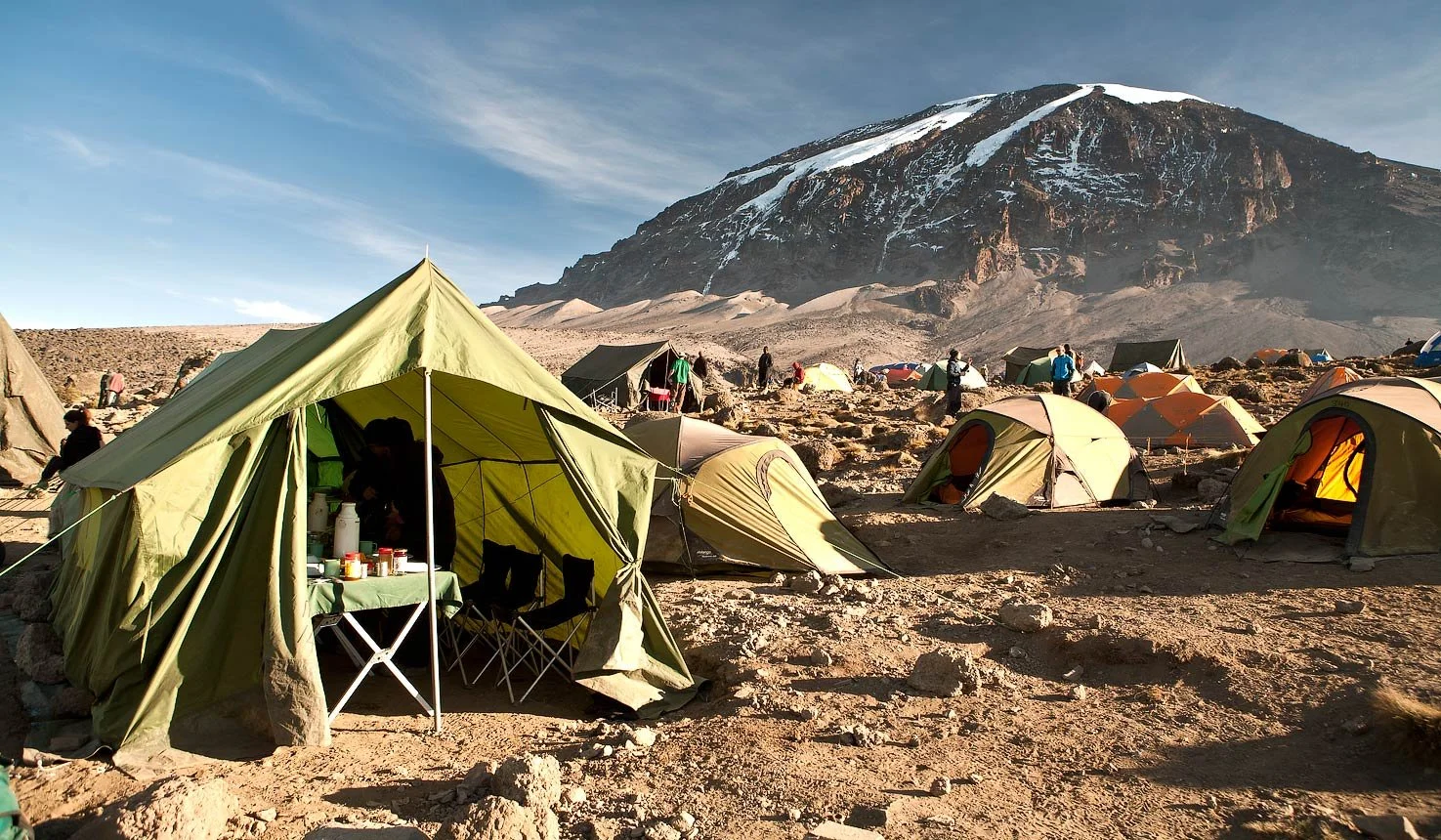
Why eating well matters on the mountain
Climbing Kilimanjaro burns far more energy than an ordinary day, and your body needs that fuel both to keep walking and to do the hard work of adapting to altitude. Eating well genuinely helps you reach the summit — which is why our meals are generous, frequent and built around plenty of carbohydrates (rice, pasta, potatoes, porridge and bread). Carbs are the most efficient fuel at altitude, and a high-carbohydrate diet is widely recommended to help ease the symptoms of altitude sickness.
One thing to expect: as you climb higher, it's very common for your appetite to fade. This is a normal effect of altitude, but it's important not to give in to it — a drop in appetite is itself an early warning sign, and your body needs the energy. Keep eating little and often, even when you don't feel like it, and favour the simple carb-rich foods that tend to go down more easily up high. Our guides will gently encourage you to keep your fuel topped up.
Meals provided
Below is an example of typical meals provided during your trek to the summit of Mt Kilimanjaro. These change day-to-day, so there's always a variety of nutritious options.
Breakfast
Porridge
Eggs & Toast
Sausages
Tea, Coffee or Hot Chocolate (Milo!)
Lunch
Boiled Eggs
Sandwiches
Fresh Fruit
Popcorn!
Dinner
Entrée - Soup
Main - Rice, Pasta or Potatoes with Meat or Vegetables
Dessert - Fresh Fruit
BYO Snacks
We recommend you bring a few of your favourite snacks along, so long as they aren’t temperature sensitive.
Trail Mix, Nuts, Dried Fruits
Lollies or chocolate bars (although these can melt early on, and freeze at the top!)
Energy bars & gels (but not drinks)
Dietary Requirements
We can cater for most dietary requirements or preferences, including:
Vegan and vegetarian options
Gluten free
Halal
If you have any concerns, please let us know.
Staying hydrated
Hydration is one of the most important parts of a safe, successful climb. The dry mountain air, the physical effort and the altitude all dry you out surprisingly quickly, and staying well hydrated directly helps your body acclimatise — it's especially important if you're taking Diamox.
Aim to drink around 3 to 4 litres of water a day. All of your drinking water is freshly boiled and filtered before it's given to you and used in cooking, so you can drink with confidence and avoid the stomach upsets that can otherwise derail a climb. Alongside water there are always hot drinks on hand — tea, coffee, hot chocolate and Milo — plus juices and cordials.
Sip steadily through the day rather than waiting until you feel thirsty — by then you're already behind.
A bladder/hydration pack makes it easy to drink on the move; carry a wide-mouth bottle as well, as bladder tubes can freeze near the summit.
Consider bringing your own electrolyte tablets or flavour drops — they replace salts lost through sweat and make it easier to keep drinking when plain water loses its appeal.
A note on alcohol
Alcohol is not permitted on the mountain, for safety reasons. However, there are some great bars at the base, so don’t worry, we’ll keep a cold beer or wine for you until you return.